A probation period is the trial stretch at the start of a new job when both the employer and the new hire find out whether the match actually works, and it is one of the most useful and most poorly-run parts of the employment relationship. Done well, it gives a new starter clear expectations, regular feedback, and a fair chance to succeed, while giving the employer a structured window to confirm they have hired the right person. Done badly, it becomes a formality nobody manages, until a review date arrives and a struggling employee is blindsided, or a good one is confirmed by default without anyone checking. The difference is entirely in how the period is set up and managed.
This guide covers what a probation period is, how long it should last, how to set it up and manage it so the review is never a surprise, how to run the review itself and handle each of the three outcomes, and the common mistakes that make probation periods unfair or useless. Whether you are hiring your first employee or tightening an existing process, the same principles apply.
What Is a Probation Period?
A probation period, or probationary period, is a defined stretch at the beginning of employment during which a new employee's suitability for the role is assessed before their position is confirmed. It is a two-way trial: the employer evaluates whether the new hire can do the job and fits the team, and the new hire decides whether the role and organisation are right for them.
Practically, a probation period usually comes with some different terms, often a shorter notice period on either side, making it simpler to part ways if the match is not working. But its real value is not the easier exit; it is the structure it provides for getting a new person up to speed. A well-run probation gives a new starter explicit expectations, regular feedback, and the support to reach the standard, which is exactly what turns a promising hire into a productive employee. The trial framing matters less than the onboarding framing: probation is your best window to set someone up to succeed.
It is worth noting that the legal specifics of probation, notice, rights, and what you can and cannot do, vary significantly by country and change over time, so the policy details should always be checked against employment law in your jurisdiction. What follows is about running the period well, which is universal.
How Long Should a Probation Period Be?
The most common probation period is three to six months, and the right length depends on the complexity of the role. Three months is typical for straightforward positions where you can assess someone's performance relatively quickly. Six months is common for more senior or complex roles, where it takes longer to see whether someone can genuinely handle the full scope of the job.
The principle is to make it long enough to fairly assess the role's real demands, but no longer than necessary. Too short, and you confirm someone before you have seen them handle the harder parts of the job; too long, and you leave a new employee in limbo, which is demoralising and can make good people feel untrusted. Many organisations also build in the option to extend probation once, by a defined amount, when the picture is genuinely unclear at the review, which is fairer than either passing someone by default or failing them prematurely.
How to Run a Probation Period Well
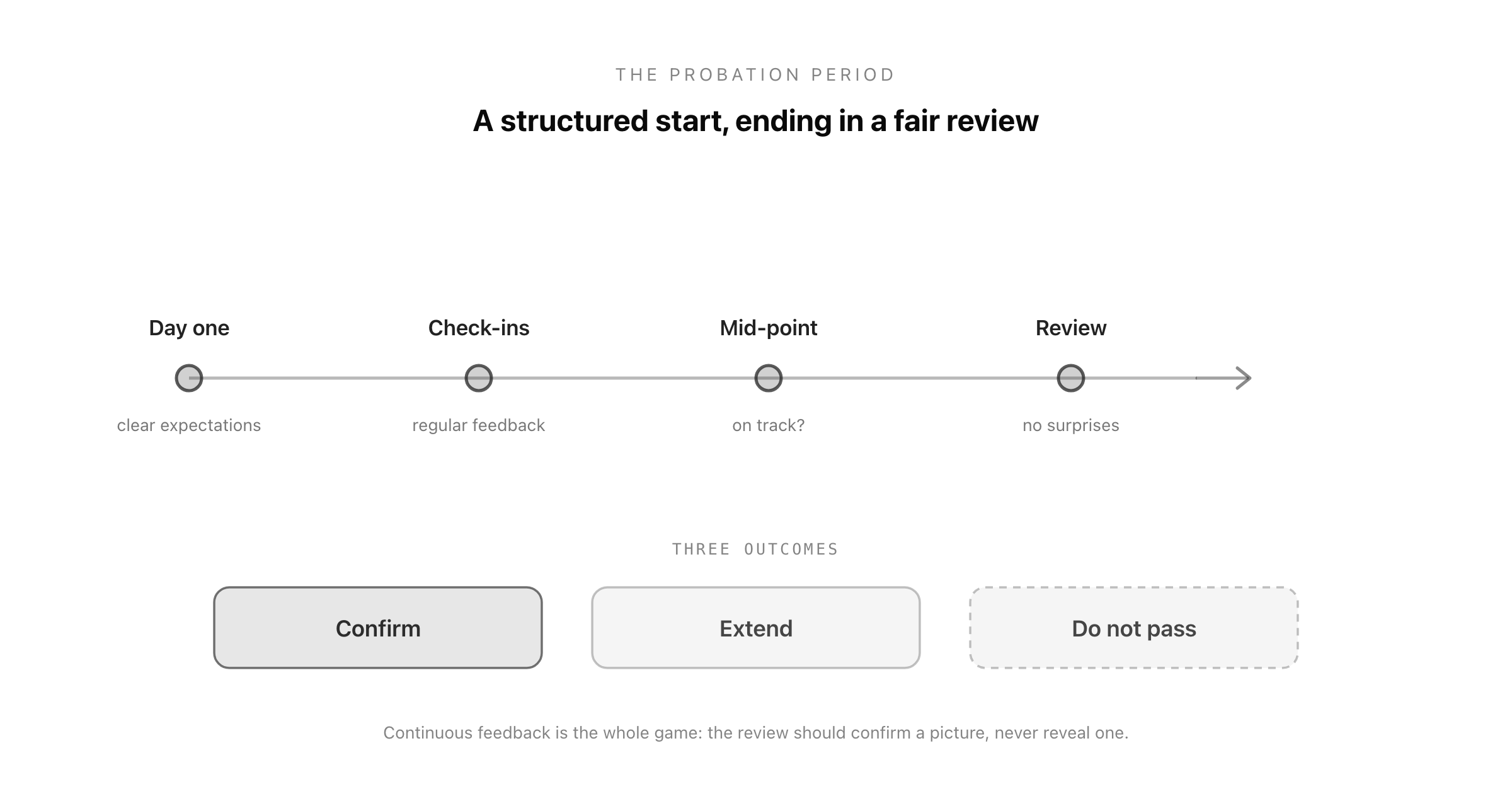
The single rule that makes probation work is this: the review should never contain a surprise. Everything else follows from it.
Set clear expectations on day one. The new hire should know exactly what they are being assessed against, what good performance looks like, and what the probation timeline is. Assessment without clear standards is just an opinion, and an unfair one. This ties directly to a strong onboarding process that gets someone productive quickly.
Hold regular check-ins, not just a final review. Schedule short, regular one-to-ones through the period, weekly or fortnightly at first, to give feedback, answer questions, and course-correct early. This is where probation is actually won or lost: consistent feedback lets a struggling employee improve while there is still time, and confirms a strong one steadily.
Document as you go. Keep a simple, honest record of the check-ins, the feedback given, and how the person is progressing against the expectations. This protects everyone: it makes the final review evidence-based rather than a vague impression, and it is your record if a difficult outcome is challenged.
Give a mid-point review. A formal check around the halfway mark, is this person on track, is invaluable. It gives a clear signal in time for either party to act, and removes any excuse for a surprise at the end.
The Probation Review and Its Three Outcomes
The end-of-probation review is a structured conversation assessing the new hire against the expectations set at the start. Because you have been giving feedback throughout, it should confirm a picture both sides already understand, not reveal a new one. A probation review generally reaches one of three outcomes.
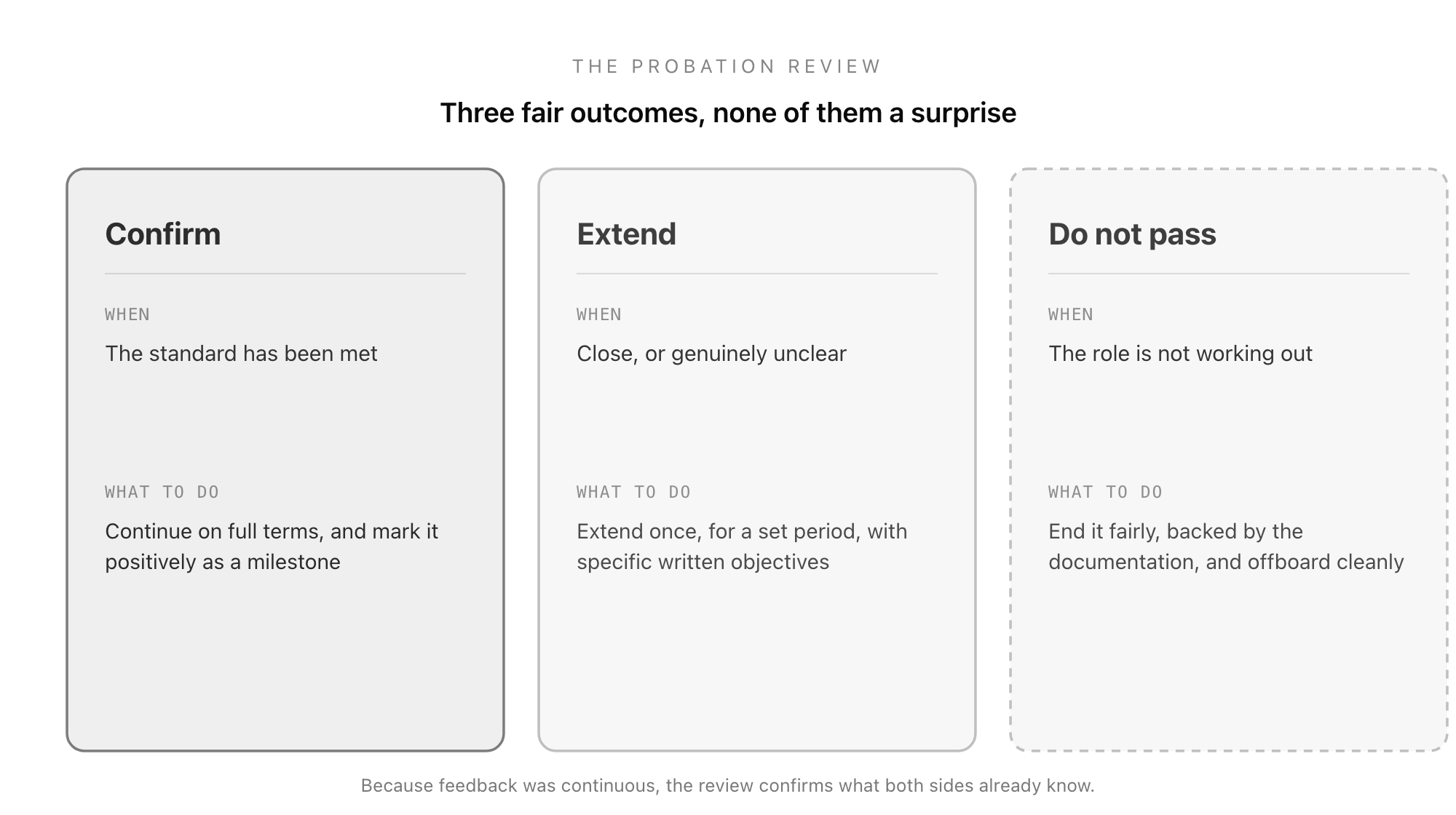
Confirm. The employee has met the standard, and their employment continues on full terms. Mark it clearly and positively; passing probation is a milestone worth acknowledging, not just letting it lapse silently.
Extend. The picture is genuinely unclear, or the person is close but not quite there, and more time will resolve it. Extend only for a defined period, with specific, written objectives for what must improve, so it is a real second chance and not an indefinite limbo.
Do not pass. The role is not working out. Handled properly, in line with your legal obligations and with the documentation from the period behind it, this is a fair outcome that the regular check-ins should have made unsurprising. Where it leads to a departure, a clean offboarding process closes it respectfully.
Probation Is a Two-Way Trial
It is easy to frame probation entirely from the employer's side, as a test the new hire has to pass, but the best-run probation periods treat it as genuinely mutual, and doing so produces better outcomes for everyone.
The new employee is assessing you too: whether the job matches what they were sold, whether the team and culture suit them, whether this is somewhere they want to build a career. Acknowledging that openly, and inviting their honest questions and concerns during the check-ins, does two useful things. It surfaces problems early, a misaligned expectation or a fixable frustration, while there is still time to address them, rather than losing a good hire three months after probation ends. And it sets a tone of partnership rather than surveillance, which is exactly the tone that helps a nervous new starter settle and perform. A probation period run as a shared effort to make the match work, rather than a one-sided judgement, is far more likely to end in a confident confirmation.
Common Probation Period Mistakes
- Surprising the employee at the review. The single worst error. If the first time someone hears they are struggling is at their probation review, the process has failed. Feedback must be continuous.
- Setting no clear expectations. Assessing someone against standards they were never told guarantees an unfair and indefensible outcome. Define success on day one.
- Treating it as a formality. Confirming everyone by default, without genuine assessment, wastes the entire point of the period. Actually manage it.
- Not documenting anything. Without a record, the review is a matter of memory and impression, which is unfair and legally risky. Keep simple, honest notes throughout.
- Leaving people in limbo. Forgetting the review date, or extending endlessly without objectives, leaves a new employee anxious and untrusted. Diarise the review and act on it.
Build Your Probation Process in Good Form
A probation period is only as good as the structure behind it: the expectations set at the start, the record of check-ins, and the review at the end. When those live in scattered notes and half-remembered conversations, the process drifts into the unfair, surprise-at-the-end pattern that undermines it. When they live in one structured place, probation becomes consistent, evidence-based, and fair to everyone.
You can build your probation check-in and review forms in minutes with the free form builder, capturing each conversation against the expectations and keeping a clean record through the period. The same structure that powers a good performance review applies directly to probation, since a probation review is really an early, higher-stakes performance conversation.
Build your probation review forms in Good Form →
A probation period is not really a test to be passed or failed; it is a structured start that, run well, sets a new hire up to succeed and gives you the evidence to make a fair call. Set clear expectations, give continuous feedback, document as you go, and make the review a confirmation rather than a surprise, and probation stops being a box-ticking formality and becomes what it should be: the foundation of a good hire.